> Overview: Products
> Overview: News
> Overview: Service
> Overview: About
Cutter wear detection in shield tunneling has become an operational priority, as tool condition directly governs excavation efficiency, project costs, and tunnel safety. With cutter replacement accounting for significant downtime in many projects, reliable wear monitoring has shifted from a preference to a necessity.
Direct Measurement Approaches
Eddy current sensors, widely deployed on disc cutter rings, can identify five distinct damage states—normal wear, eccentric wear, tip blunting, chordal wear, and insert fracture—while also enabling rotational speed calculation to detect cutter jamming. Image analysis offers another pathway, with high-resolution cameras and convolutional neural networks automating wear region identification and progression tracking.
Indirect Detection via Operational Signals
Vibration analysis, with sensors installed on the shield body rather than the cutterhead, has demonstrated clear correlations between vibration patterns and wear progression. Acoustic emission combined with machine learning classifiers has achieved wear-level prediction accuracy exceeding 95%. Parameter fusion models integrate penetration rate, cutterhead speed, thrust, and torque into an "equivalent wear" index for real-time quantitative assessment.
Intelligent Prediction and Transfer Learning
Deep learning models have outperformed traditional empirical formulas. A CNN-LSSVM hybrid achieved 99.4% accuracy in damage state classification, while the MVSAPNet prototypical network delivered 91.87% accuracy in real-world projects. To address model generalizability challenges across different geological conditions, Transformer-based transfer learning with domain-adversarial neural networks has been developed, validated in the Qingdao Jiaozhou Bay Second Subsea Tunnel project.
Outlook
The field is moving toward edge computing and digital twin integration for closed-loop monitoring and autonomous cutter-change decision-making, reducing downtime and enhancing tunneling safety under complex geological conditions.


Aerial Platform Boom Vibration: Causes and Solut
28View · 2026-10-21
Tower Crane Wind Safety Every Site Needs
228View · 2026-09-03
Crane Anti-Tilt Tech Boosts Safety
314View · 2026-07-28

HITACHI and GRAVIS Robotics Showcase Autonomous
821View · 2026-06-22
Digital Technologies Drive Smarter Roadbuilding
606View · 2026-04-23
Excavator Truck Loading Techniques: Improving Ef
977View · 2026-03-24
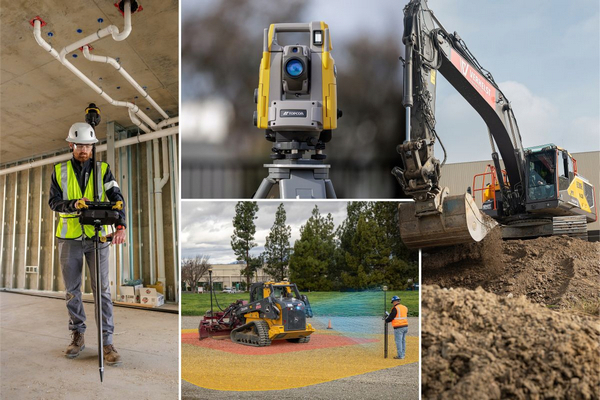
Topcon Positioning Systems Launches New 3D Machi
804View · 2026-03-20
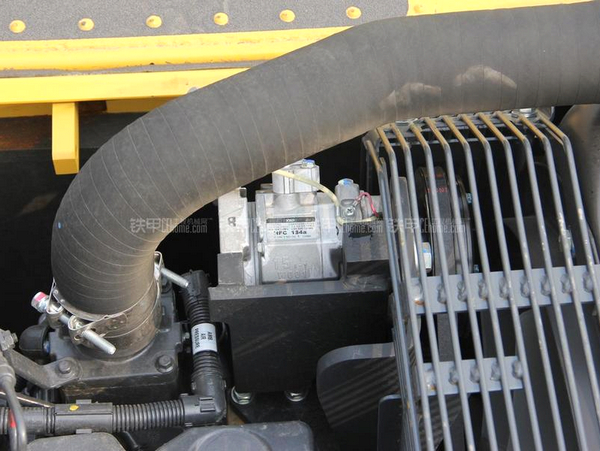
Excavator Air Conditioning: Proper Use and Maint
1135View · 2025-12-25
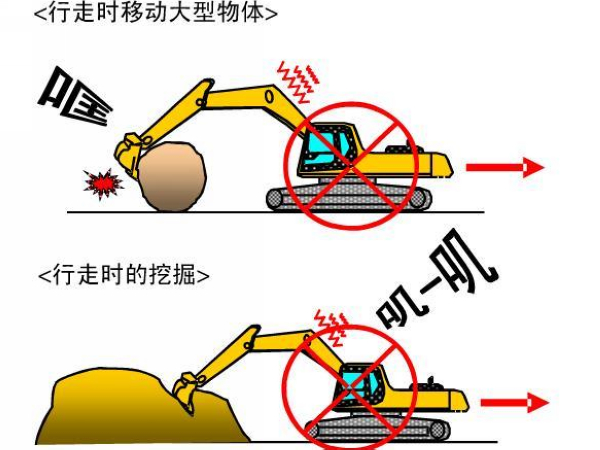
Four Prohibited Operations for Excavators
1179View · 2025-10-29
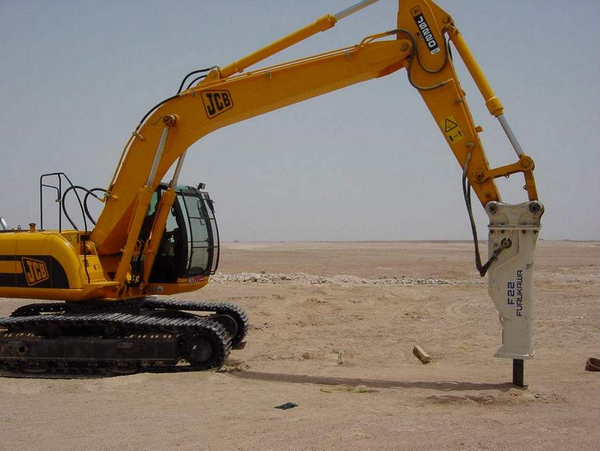
How To Properly Maintain And Use A Hydraulic Br
1373View · 2025-07-28
Special Techniques For Excavator Tracks
1514View · 2025-07-22
Techniques For Improving The Efficiency Of Excav
1527View · 2025-06-24
Explanation Of Excavator Slope Brushing Technolo
1511View · 2025-05-20
Troubleshooting Oil-Water Mixing in Excavator En
2191View · 2025-04-29
Prevention And Emergency Treatment Of Excavator
2021View · 2025-04-17
Hydraulic Oil Overheating Solution Skills
1557View · 2025-03-26
Scientific Use Of The Crushing Hammer
1801View · 2025-03-14
Tips About Excavator Lifting
1807View · 2025-02-18
Excavator Brush Technique Tips
1802View · 2025-01-14
Excavator Ten Inspection Items
1711View · 2024-12-24
2020-07-08
2020-08-24
2019-12-25
2020-01-21
2019-11-01
2019-10-15
2021-02-01
2021-01-14
2020-12-11
2020-10-26
2020-07-04
2020-09-30

+86-532-8579-6888
+86-532-8579-6888
+86-138-1796-0597
+86-189-5203-1496
Suite 2505, Block A, China Railway Qingdao Center, No. 8 Hong Kong Middle Road, Shinan District,Qingdao, Shandong Province, China